
Convert Clicks to Leads: Optimizing Digital Ads for Boca Raton Businesses
There’s a pattern that shows up consistently among Boca Raton businesses that are frustrated with their digital advertising results. The campaigns are running. The impressions are being generated. The clicks are happening. But somewhere between the click and the conversion, prospects are disappearing — and the marketing budget keeps draining without producing the qualified leads the business actually needs.
This gap between click volume and lead volume isn’t random. It has specific, diagnosable causes that appear repeatedly across industries and business types. And the good news is that each cause has a clear, practical fix. For businesses in Boca Raton and Palm Beach County that have been running digital ads and wondering why the results don’t match the spend, understanding these three root causes is the starting point for turning that around.
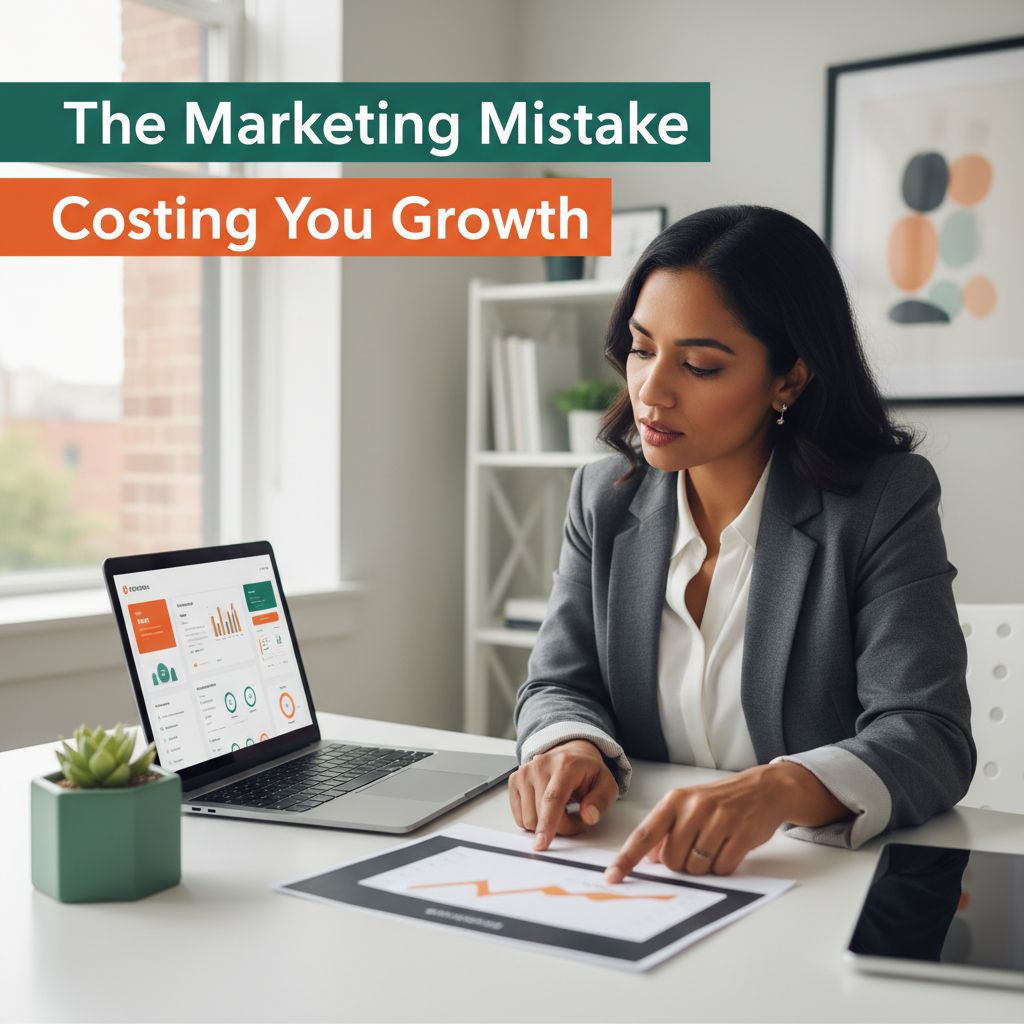
The Three Conversion Killers in Digital Advertising
Problem One: Misguided Audience Targeting
The most fundamental cause of poor conversion rates in digital advertising is showing your ads to the wrong people. Broad audience targeting that reaches large numbers of people within a geographic area generates volume — impressions, clicks — but produces low conversion rates because a large percentage of that audience has no meaningful probability of becoming a customer.
Consider a Boca Raton restaurant promoting a premium dining experience to a broad local audience that includes a substantial portion of college students and young adults seeking budget-friendly options. The ad gets clicks from curious browsers, but those clicks almost never become reservations. The budget gets spent. The lead count stays low. The campaign looks like it isn’t working — when in reality, the targeting is the problem, not the channel.
Effective audience targeting requires specificity that goes well beyond location. It requires understanding the demographic profile, behavioral signals, income level, interests, and online activity patterns of the people most likely to become your customers — and building your targeting parameters around those specific characteristics rather than hoping that geographic proximity will do the work of audience qualification.
For businesses in Boca Raton, this means using the targeting capabilities available in Google Ads, Meta, and LinkedIn to get specific: not just “people in Palm Beach County” but “people in Palm Beach County who match these behavioral and demographic characteristics that indicate high probability of needing and being able to afford what you offer.”
Problem Two: Uninspiring Ad Creative
Precise audience targeting gets your ad in front of the right people. Your ad creative determines whether they care. An ad that fails to communicate a compelling reason to act — through weak copy, generic imagery, or an unclear value proposition — generates impressions without engagement, even when the targeting is perfect.
The most common creative failure in local digital advertising is generic messaging that could apply to any business in the category. “Quality service and competitive prices” communicates nothing that differentiates your business from any competitor. It gives the prospect no specific reason to click rather than scrolling past.
Effective ad creative speaks directly to a specific need, concern, or desire of the target audience — ideally one that’s been identified through actual customer data or market research rather than intuition. It communicates one clear, compelling reason why this particular offer from this particular business is worth the prospect’s attention right now. And it includes a specific, actionable call to action that tells the prospect exactly what to do next.
For businesses in Palm Beach County competing in saturated local categories — real estate, financial services, home improvement, healthcare — the creative that cuts through is almost always the creative that’s most specific and most relevant to a narrowly defined audience need. “Protecting your Boca Raton estate from probate delays — schedule a free consultation” outperforms “professional estate planning for families” every time, because it speaks to a specific concern that a specific audience actually has.
Problem Three: A Landing Page That Doesn’t Convert
This is the most consistently overlooked and most costly conversion killer in digital advertising. A business can have excellent targeting and compelling creative — but if the landing page experience that follows the click fails to deliver on the ad’s promise, the conversion doesn’t happen.
The most common landing page failure is misdirection: an ad that makes a specific promise or promotes a specific offer that clicks through to a generic homepage. A law firm in South Florida running ads for personal injury consultation services directs visitors to their firm’s general homepage — where the visitor has to search for the relevant practice area, read through unrelated content, and eventually find the contact form. Most of them don’t. They leave. The click was paid for and produced nothing.
Even when the destination is relevant, landing pages frequently underperform because they fail the basic tests of conversion design: they load slowly on mobile devices, they don’t immediately communicate the value the ad promised, their calls to action are weak or buried, or they ask visitors for too much information too early in the relationship.
A real estate agent in Boca Raton promoting luxury waterfront condos needs a landing page dedicated specifically to those properties — featuring high-resolution photography, detailed floor plan information, neighborhood highlights, and a simple, frictionless inquiry form. The visitor who clicked on a waterfront condo ad arrives at a page that immediately confirms they’re in the right place and makes the next step obvious and easy. That alignment between ad promise and landing page experience is what produces the conversion.
Building a Digital Ad Funnel That Actually Converts
Start With Audience Intelligence
Before writing an ad or designing a landing page, invest in understanding your audience with genuine specificity. Who are your best existing customers? What do they have in common — demographically, behaviorally, situationally? What motivated them to choose you over alternatives? What was their state of mind when they were first looking for your service?
This intelligence should drive every subsequent decision in your campaign. Your targeting parameters should be built from it. Your ad messaging should speak directly to the motivations and concerns it reveals. Your landing page should address the specific objections and questions that come up at the decision stage of your audience’s journey.
The campaigns that convert most efficiently aren’t the ones built on assumptions about what the audience wants — they’re the ones built on evidence. For Boca Raton businesses operating in competitive markets, that evidential foundation is the difference between campaigns that optimize over time and campaigns that spend without improving.
Develop Messaging That Addresses the Real Decision
Your ad copy should do one thing well: give someone who fits your ideal customer profile a compelling reason to stop scrolling and click. That reason almost always comes down to relevance — does this message speak to something I actually care about, in a way that suggests this business can actually help me?
For local businesses in Boca Raton, local specificity in ad messaging consistently improves performance. An ad that mentions specific neighborhoods, references familiar landmarks, or demonstrates genuine knowledge of the local market signals to prospects that this isn’t a national chain running generic content — it’s a local business that understands their specific situation.
A/B testing different headlines, different calls to action, and different value propositions generates the performance data needed to optimize messaging continuously rather than relying on the initial version indefinitely. Most successful digital campaigns look quite different after three months of systematic testing than they did at launch — because the testing reveals what actually resonates rather than what seemed like it should.
Design Landing Pages for Conversion, Not Information
A landing page is not a website. Its job is not to provide comprehensive information about your business — that’s what your website is for. A landing page’s job is to receive a prospect who is already interested (they clicked the ad) and move them efficiently toward a specific conversion action.
This means landing pages should be designed with ruthless focus. One primary message that matches the ad exactly. One primary call to action that’s immediately visible. Social proof — testimonials, reviews, credentials — positioned to address the conversion anxiety of a first-time prospect. A form or contact mechanism that asks for the minimum information needed for the specific conversion goal.
Page load speed is a non-negotiable technical requirement. Research shows that each additional second of load time on mobile significantly increases bounce rates. For Boca Raton businesses running campaigns to mobile-heavy audiences, a slow landing page is a consistent conversion drain that needs to be addressed before any other optimization effort will be fully effective.
The Analytics Infrastructure That Makes Optimization Possible
None of the improvements described above are sustainable without robust conversion tracking. Without clear data connecting your ad spend to your actual conversions — knowing which campaigns, which ad groups, which keywords, and which audience segments are producing qualified leads at what cost — you’re optimizing blind.
Proper conversion tracking for a digital advertising program includes tracking meaningful actions, not just clicks: form submissions, phone calls, appointment bookings, or whatever specific action constitutes a lead for your business. This data, combined with cost information from your ad platforms, gives you the cost per qualified lead by campaign and audience segment — the number that actually tells you what’s working.
With this visibility, budget allocation decisions become evidence-based rather than intuitive. Campaigns producing qualified leads at an acceptable cost get more budget. Campaigns producing clicks without conversions get investigated, optimized, or reduced. Over time, this discipline produces a consistently improving program rather than one that plateaus at mediocre performance.
How MinuteMarketing.ai Helps Boca Raton Businesses Convert More
MinuteMarketing.ai works with businesses in Boca Raton and throughout Florida to diagnose and address the specific gaps in their digital advertising funnels — from audience targeting and creative development through landing page optimization and conversion tracking. Our approach is analytical and evidence-based: we identify where your current campaigns are losing prospects, develop targeted improvements to each stage of the funnel, and implement the tracking infrastructure needed to measure the impact of those improvements and continue optimizing over time.
Ready to Turn Your Ad Clicks Into Qualified Leads?
If your digital advertising is generating clicks but not conversions, the problem is diagnosable and fixable. MinuteMarketing.ai is ready to help your Boca Raton business identify exactly where your funnel is leaking prospects and build the optimized advertising system that converts your ad investment into the consistent stream of qualified leads your business deserves.
📞 Call 833-408-1630 or 561-645-8190 | 👉 Optimize Your Digital Advertising for Superior Results in Boca Raton